Corvette
ABOUT
Overview
The Corvette Stingray instrument cluster was one of my earliest large scale product design projects. Working as part of a small but mighty team at VisualHero, we were brought in by JCI to help design the cockpit experience for one of America's most iconic performance cars. The caliber of the client made for a steep learning curve, and that pressure accelerated my growth in ways that other projects might never have.

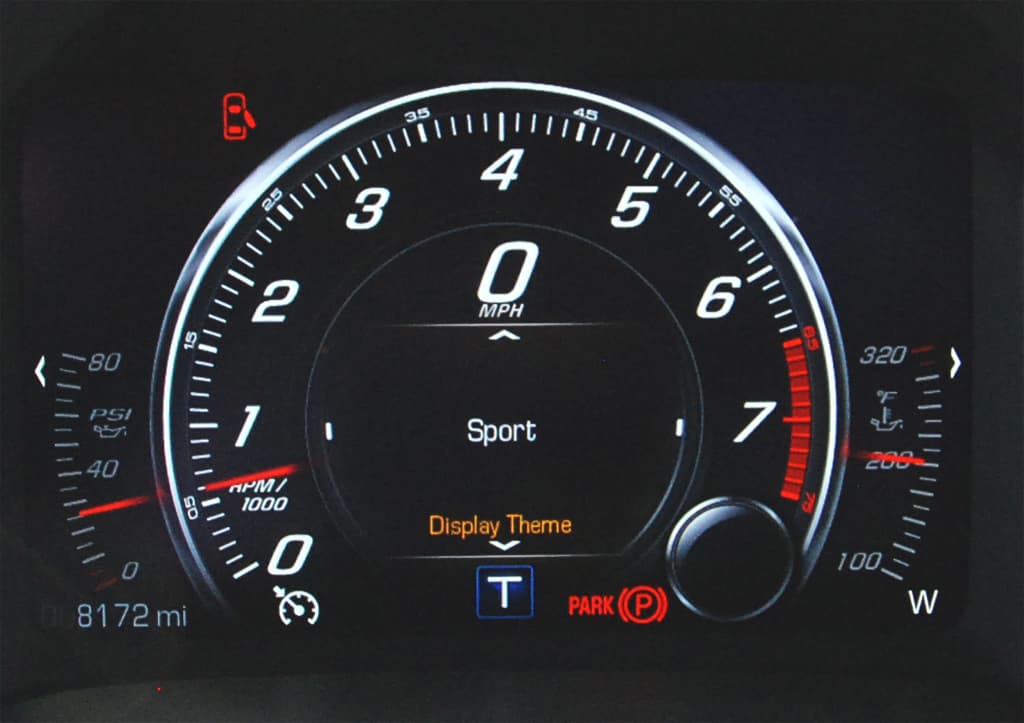
Instrument cluster
the drive mode shown here was my focus, though I helped with all the others as well. Precision mattered here, every element had to be pixel perfect. Working closely with the art director, we set out to fuse the current trend of skeuomorphism with what we saw coming next: flat design. Not everything needed depth the way other interfaces did. We wanted it to feel fresh and new, while still feeling familiar. What made the work especially demanding was the hardware. This was embedded software shipped on physical units, with no ability to push updates after launch like the luxuries we have now. Every decision carried real weight, and that reality made the developer relationship one of the most important parts of the process. We collaborated closely with engineering from start to finish, which shaped how I think about design and development working together to this day.
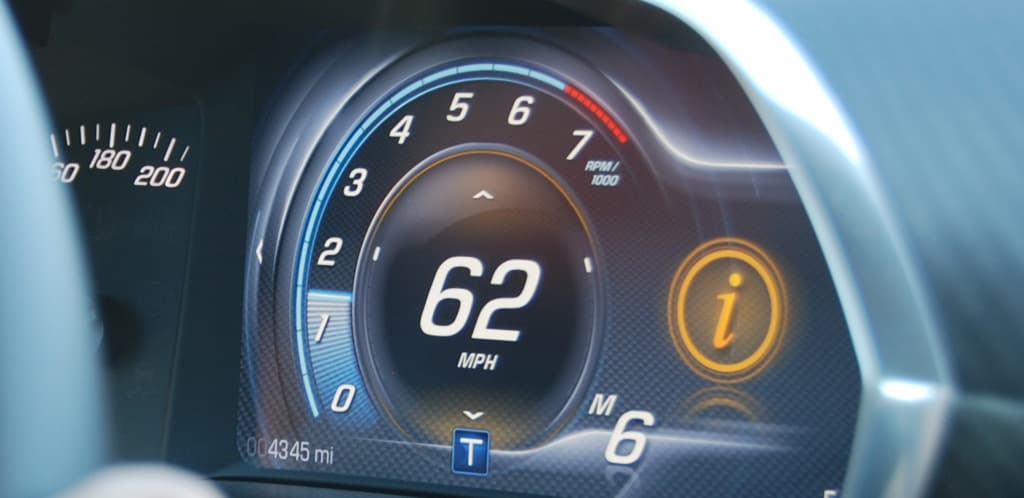
Drive modes
The interface didn't exist in isolation. The instrument cluster lived inside what felt like a cockpit with its own carefully refined industrial design language. Working with the industrial design team, we asked about intent of their design, and recieved critical feedback that helped shape the form. It was aggressive angles, tensioned surfaces, and forms that communicated performance before the engine turned over. It sold everything a brand should. When the physical and digital design languages are in conflict, the driver feels it even if they can't name it.
Compliance & multi-display
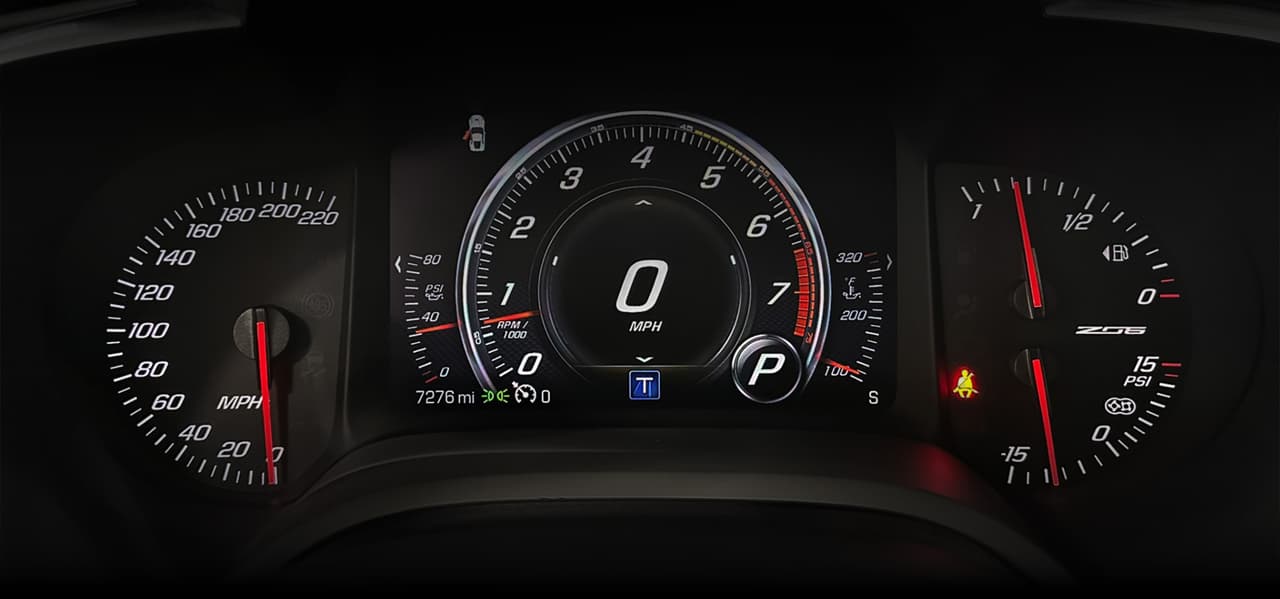
The scope went well beyond visual design. We were responsible for designing across multiple display modes, each serving a distinct driving context with its own hierarchy and layout logic. Layered on top were strict government regulations requiring warnings and alerts to be communicated well in size, placement, color, and timing. These were compliance requirements, not creative decisions. Balancing the two is always a challenge.
Every car designer dreams of designing a Corvette. They dream of it, but only a few of them have an opportunity to do it. And I got to tell you, you don't want to be the designer who screws up the Corvette either.
- Steve Hood